

From the Real Talking Fish on Instagram, where the photorealistic tuna news anchor from the kids cartoon SpongeBob SquarePants covers world news, to biased social media accounts on TikTok, X (formerly Twitter) and various social media sites: the way that people, especially teenagers, consume news is changing.
Senior Chase Becker is a regular consumer of the Real Talking Fish.
“On Instagram, I do like to watch the Real Talking Fish,” Becker said. “Obviously, I do think it’s kind of funny. But, so far, he is one of the new sources that I’ve seen that is really unbiased. He talks [about] both sides [of] stories. And, I think that’s really important today because a lot of news stations will give you a one-sided story.”
While I do think that generally the Real Talking Fish is fairly unbiased, I find the fact that 1.4 million people, just on Instagram, use an abrasive, cartoon character to consume news a bit concerning.
This trend of using social media to consume news is not just exclusive to Becker: in an online survey conducted by The SHS Courier on 115 students in a variety of English classes, over 57% of SHS students polled said they mostly consume their news through social media posts and videos. 72% of students said they seek out news stories and information twice a week or less. 76% of students said they physically read a news or magazine article twice a week or less.
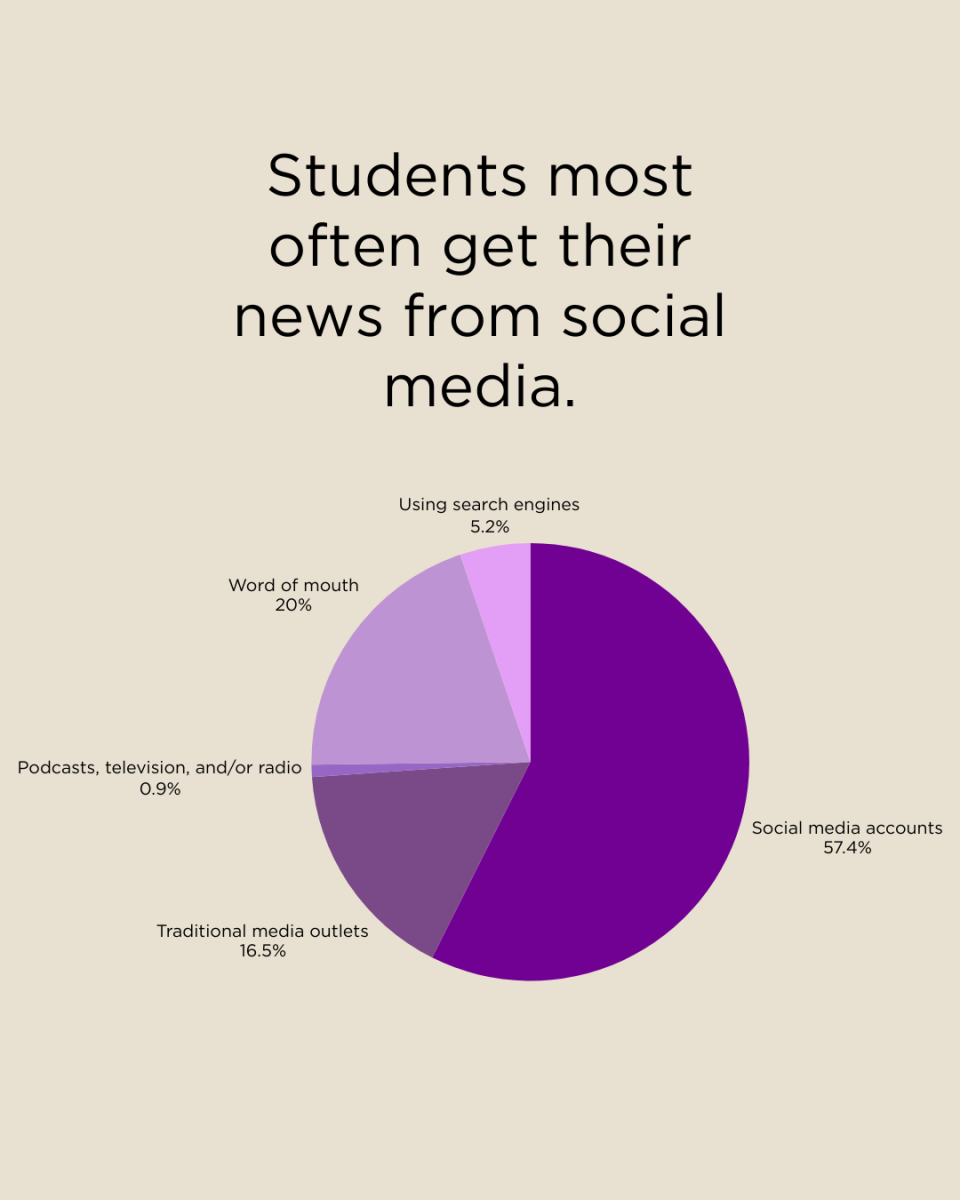
“I feel like me and most other teens will be the same way [with social media],” Becker said. “It’s very exposed to a lot of people, especially younger generations. And, on top of that, social media is kind of how people get their points across now. Even the president mainly uses Twitter– that’s his main way of communication. I feel like people hear more about him through Twitter than any other source. I think that kind of proves how strong its [presence] is nowadays.”
Despite these statistics, 80% of students rated the level of importance to consume news and stay up to date with the news a 4 or 5 out of 5. And, 58% of students said they wished they stayed more up to date with the news.
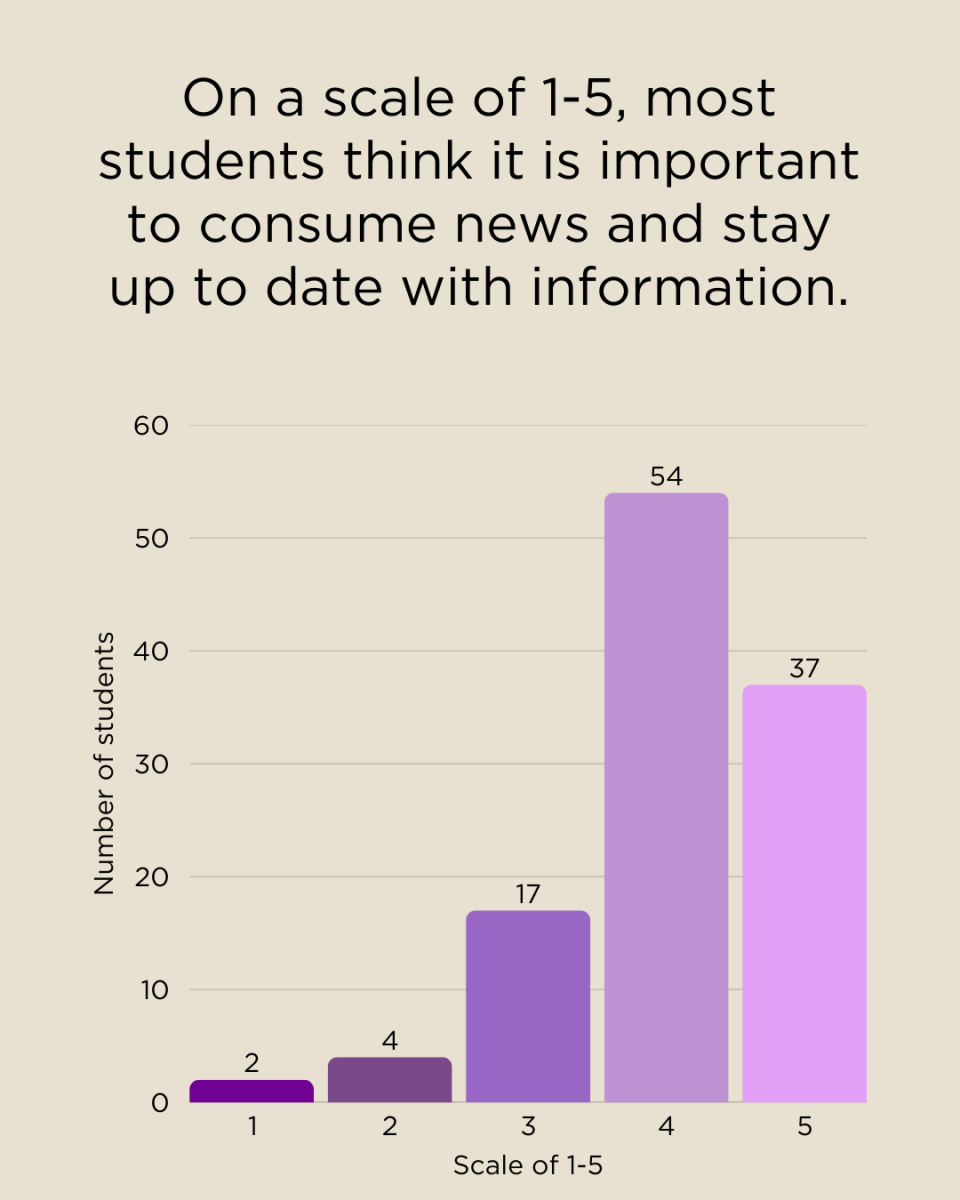
While many students said they use the social media accounts of publications such as The New York Times, CNN, Fox 8 and others to consume news, there is a deeper issue of extremely biased ‘news’ accounts that are taking over social media. This trend could be explained by fears of ‘fake news’ and manipulation by news outlets.
“There’re countless sources [and] videos online that will give you practically the exact same story with the exact same words just to spin the same narrative,” Becker said, when asked if he uses traditional news outlets. “I generally try to stay away from stuff like that. It’s very hard for me to trust certain news outlets. If I want to start reading one thing, I have to read multiple different sources just to make sure I understand every aspect before I form my own opinion.”
With an ever-growing online misinformation phenomenon, more and more people are becoming disillusioned with traditional news outlets. The misinformation phenomenon is mostly spurred by social media. With the rise of biased ‘news’ social media accounts and influencers, this issue is even more exaggerated.
These social media accounts parade around with a facade of objectivity and fact-based statistics. When, in reality, they hand pick facts and information to further their inflexible agendas.
According to a Pew Research study, in the summer of 2024 one in five Americans said they regularly get their news from social media influencers. There is minimal difference between Republicans and Democrats on this issue.
These influencers and social media accounts lack the journalistic training, resources and integrity that traditional media outlets possess. They are not held to legal standards and regulations that traditional media outlets are, such as defamation and news gathering laws. Many of them do not have the same dedication to truth, accuracy, independence, impartiality, transparency, verification and minimization of harm that traditional outlets do.
And, under federal law, these influencers do not need to disclose that they are getting paid for content to promote certain ideologies, policies or viewpoints.
As a result, they are able to say almost anything, lie about anything and put forward any ultra-biased narrative they wish without true consequence.
And, with the rapid expansion of AI, the dangerous development of faulty, extremely biased news will only be heightened.
Traditional media outlets emphasize professional fact-checking, editorial oversight, accountability, credibility, balanced perspectives, more in depth research and a focus on the public interest.
If you truly believe that publications such as The New York Times and USA Today are untrustworthy, it’s not like Candace Owens or Joe Rogan are a better alternative. They are not real, trustworthy journalists. They are hyper-biased social media gurus purposely pushing agendas without properly presenting the facts to their audiences.
These social media accounts and personalities do not have our best interests at heart.
Yes, reading and consuming news from multiple sources can be annoying sometimes, but that is the price you must pay for freedom of press and freedom from censorship we have in the United States.


